

How to Remove Oxidation from Aircraft Paint and Restore the Shine
Sep 29th 2026
What Aircraft Paint Oxidation Looks Like
Aircraft paint spends years exposed to ultraviolet light, temperature changes, moisture, airborne contamination and repeated cleaning. Over time, some finishes lose gloss and develop a chalky or faded appearance. That condition is commonly described as oxidation, but not every dull aircraft surface has the same problem.
Before polishing, determine whether you are dealing with removable contamination, mineral deposits, light surface oxidation, deeper paint deterioration or coating failure. Those conditions can look similar from several feet away and require very different responses.
A good restoration process begins with diagnosis. The objective is to use only as much correction as the surface needs.
1. Clean the Surface Before Judging the Paint
Dirt and environmental film can make sound paint look worse than it is. Start with a thorough, compatible cleaning process and remove loose contamination. If water spots, bugs, exhaust film or oily residue are present, address those conditions before deciding how much polishing is required.
Once the surface is clean and dry, inspect it in good light. Look for uniform dullness, chalking, isolated stains, scratches, thin areas, peeling, cracking or other evidence that the paint may be beyond simple polishing.
If the paint system is unknown or the aircraft has a special coating, confirm the appropriate care process before proceeding.
2. Test a Small Area First
A test section is one of the most useful tools in aircraft paint restoration. Choose a representative area and try the least aggressive polishing method that could reasonably improve it. The test tells you whether the dullness is responding and how much effort is required before you commit to the entire aircraft.
If a light hand polish restores gloss, the aircraft may only need mild correction and protection. If there is little improvement, a more advanced machine-polishing process may be required. If the paint shows signs of failure, continued polishing may remove material without producing a durable result.
The test section should guide the plan. Do not decide the entire aircraft needs heavy compounding before proving it on a small area.
3. Light Oxidation May Respond to Mild Polishing
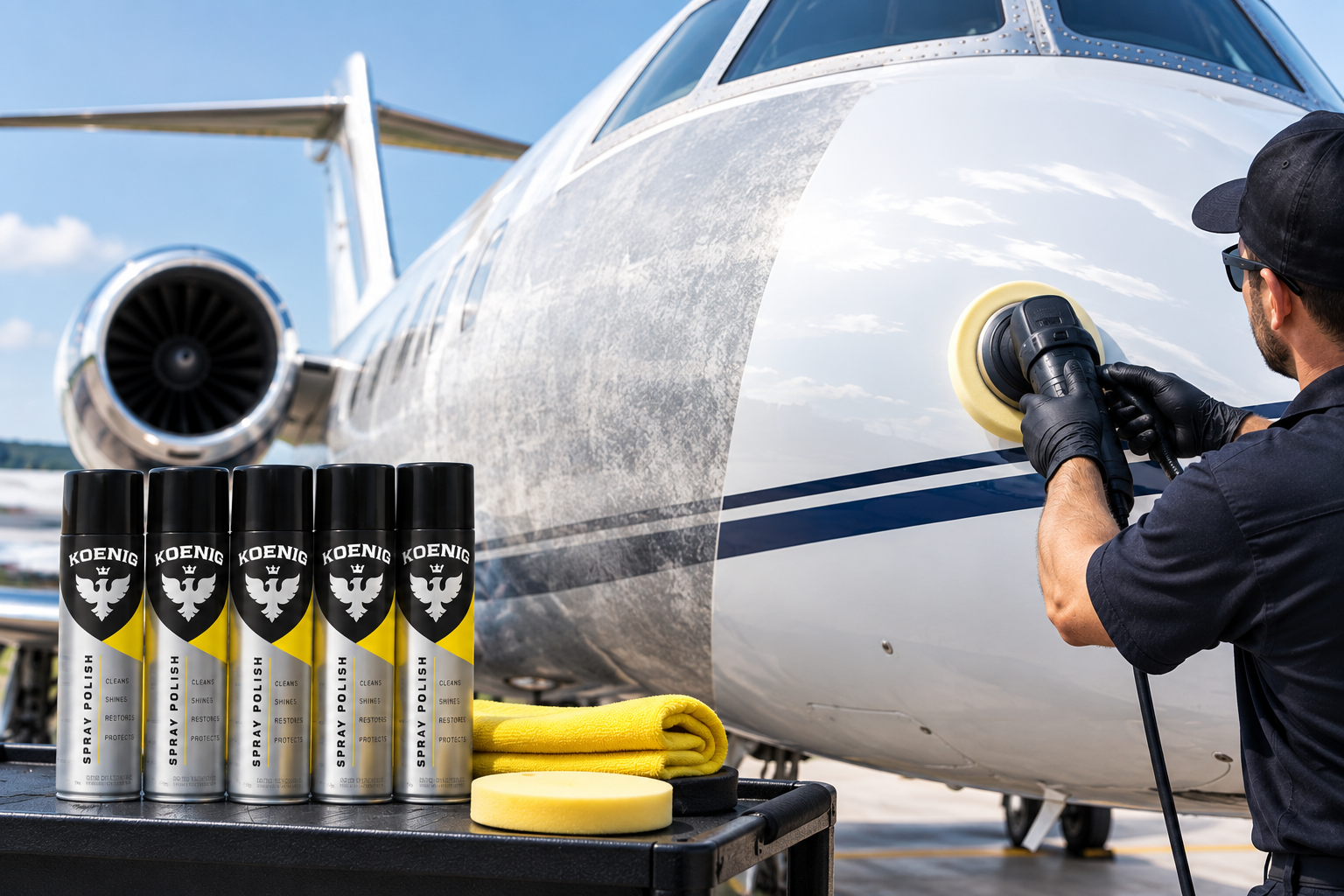
Light oxidation is the condition most likely to improve with a conservative polishing process. Work in small sections, use clean applicators or pads and inspect the result frequently. The goal is to restore clarity and gloss without removing more paint than necessary.
Hand application can be appropriate for localized areas, maintenance polishing or surfaces that respond easily. It is slower on a large aircraft, but it also provides a controlled way to evaluate a product before moving to machine polishing.
When using any polishing product, keep residue, pads and towels clean. Oxidized material can load the applicator quickly and reduce consistency from one panel to the next.
4. Heavier Oxidation Can Require Machine Polishing
When oxidation is more advanced, a machine polisher can provide the mechanical action needed to restore the surface. That does not mean “more aggressive is better.” Aircraft paint thickness, rivets, edges, graphics and previous correction history all matter.
An experienced detailer should select the least aggressive pad and polish combination that achieves the required correction. Edges and raised features can be more vulnerable to over-polishing. Uniform results also require careful lighting and repeated inspection.
If the surface cannot be corrected without excessive material removal, refinishing may be more appropriate than continued polishing.
5. Know the Difference Between Oxidation and Paint Failure
Polishing removes or refines material at the surface. It cannot rebuild paint that is peeling, cracking, delaminating or otherwise failing. A badly weathered finish may become temporarily glossier after polishing but still lack the integrity needed for a durable restoration.
Marketing claims should be especially careful here. Dramatic before-and-after photos can create the impression that any faded aircraft can be restored with one product. Real outcomes depend on the paint system, condition, age, previous maintenance and severity of deterioration.
If there is uncertainty, an experienced aircraft refinishing professional or maintenance provider should evaluate the surface.
6. Protect the Finish After Correction
Restoration should be followed by a maintenance plan. Once gloss is improved, a compatible protective product can help reduce environmental bonding and make routine cleaning easier. Keeping the aircraft clean and protected also reduces how often aggressive correction is needed.
Storage conditions matter. Hangaring, prompt removal of contaminants and regular maintenance generally reduce surface deterioration compared with long periods of uncontrolled outdoor exposure.
The objective is not to polish the aircraft repeatedly. It is to correct only when necessary and then maintain the finish so that routine cleaning does most of the work.
Using Koenig Polish for Light Restoration and Maintenance
Koenig Polish can be evaluated for cleaning, light polishing and protective maintenance on appropriate aircraft exterior surfaces. For mild oxidation, a controlled test area can show whether hand application provides the required improvement. More severe oxidation may need machine polishing or a separate correction process first— for a closer look at product selection criteria, see our guide on choosing the best aircraft cleaner and polish.
This is a stronger and more credible position than promising one-step restoration for every condition. Koenig’s role can vary by aircraft: routine maintenance on one surface, light restoration on another, or final polishing and protection after heavier correction.
Follow the aircraft, coating and operator requirements throughout the process.
Frequently Asked Questions
Can oxidized airplane paint be restored?
Light to moderate surface oxidation can often be improved through cleaning and polishing. Severe deterioration, thin paint or coating failure may require advanced correction or refinishing rather than continued polishing.
What causes aircraft paint to look chalky or faded?
Long-term ultraviolet exposure, weather, contamination, repeated washing and age can contribute to loss of gloss and surface oxidation. The exact behavior depends on the paint system and environment.
Can aircraft oxidation be removed by hand?
Mild oxidation may respond to hand polishing, especially in a small area. Larger or more severe jobs often require machine polishing by someone experienced with aircraft finishes.
When should a machine polisher be used?
Use machine polishing when a test area shows that hand polishing is not efficient enough and the paint condition supports correction. Choose conservative pads and products and protect edges, graphics and sensitive areas.
How can aircraft paint oxidation be reduced in the future?
Regular cleaning, prompt contaminant removal, appropriate protection and favorable storage conditions can reduce the rate of deterioration and the need for aggressive polishing.
Learn more about Koenig Polish for aircraft polishing, light restoration and protective maintenance on appropriate exterior surfaces.