

How to Clean Airplane Windows Safely: Acrylic, Plexiglass and Other Aircraft Transparencies
Oct 3rd 2026
Aircraft Windows Are Not Ordinary Automotive Glass
One of the easiest aircraft-detailing mistakes is treating every transparent surface as if it were household or automotive glass. Many aircraft windows and windshields are made from acrylic or other plastic transparency materials that can scratch, haze or craze if they are cleaned with the wrong product or technique.
The first step is therefore not choosing a “strong” glass cleaner. It is identifying the transparency material and following the aircraft or transparency manufacturer’s care instructions. If the material is unknown, do not assume.
This is an area where conservative technique matters more than speed. A few extra minutes spent removing grit safely can prevent scratches that remain visible for years.
1. Identify the Material and the Rules That Apply
Aircraft transparencies may be acrylic, polycarbonate or another material, and some may have coatings or manufacturer-specific care requirements. The correct cleaner for one transparency is not automatically correct for another.
Before using a new product, check the aircraft maintenance information, operator procedures or window manufacturer guidance. Many transparency makers specify dedicated plastic-safe cleaners and restrict certain solvents or household glass-cleaning ingredients.
If a professional detailing company services multiple aircraft types, it is worth keeping a simple material-and-care reference for recurring customers rather than making the same compatibility decision from scratch every visit.
2. Remove Loose Grit Before Wiping
Dust and sand are major scratch risks on plastic transparencies. Dry wiping can drag those particles across the surface and create fine lines that become especially visible in bright sun or at night.
Use the approved method to remove or flush loose contamination before the main wiping step. Avoid pressing a dirty towel into the window. Once grit is removed, use a clean, soft microfiber cloth reserved for transparency work.
Keeping window towels separate from paint, belly and wheel-area towels is a simple professional practice that prevents cross-contamination.
3. Use Light Pressure and Clean Towels
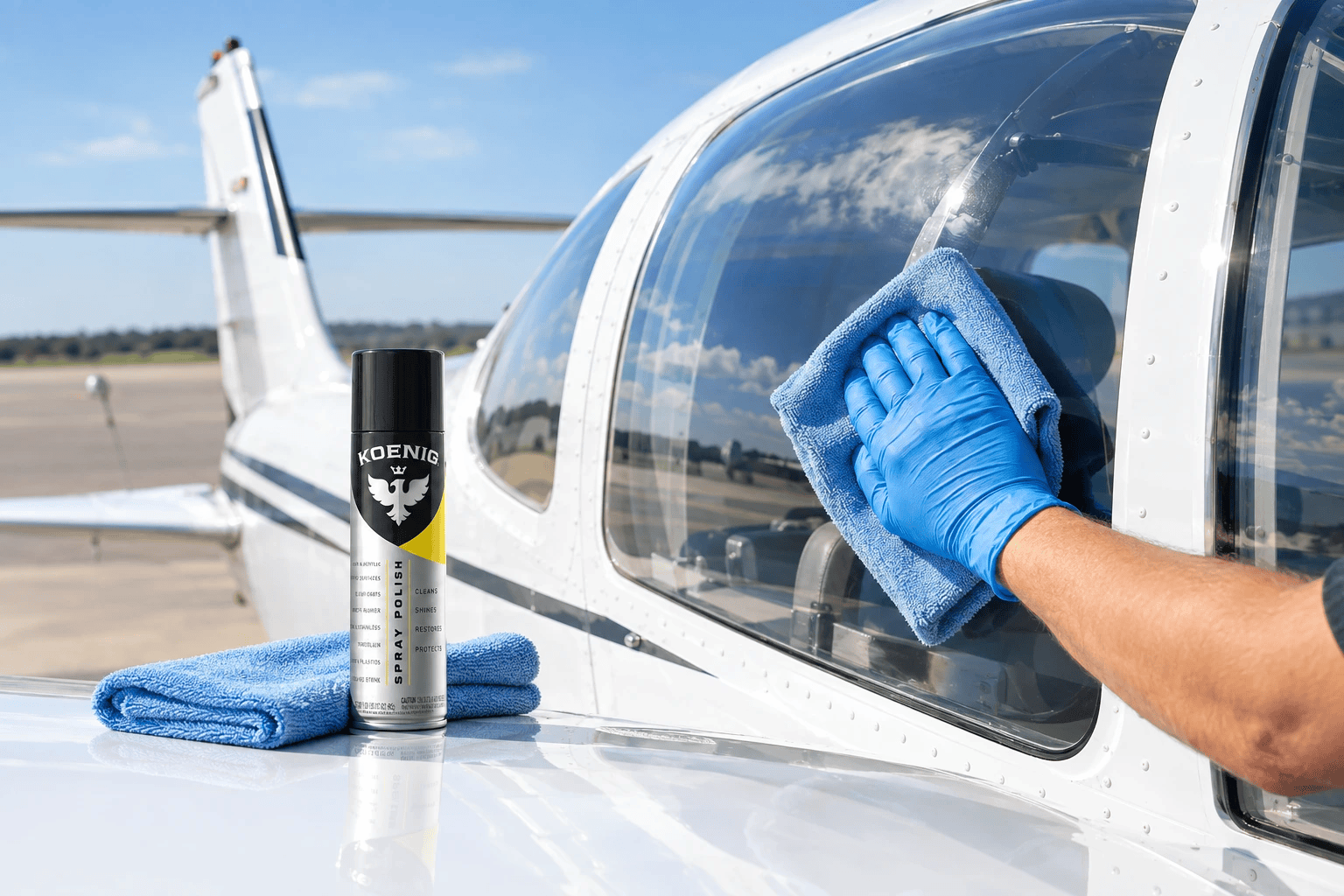
Plastic transparencies do not benefit from aggressive scrubbing. Apply the approved cleaner according to its instructions, let it loosen ordinary residue and wipe with light pressure. Fold the microfiber towel so multiple clean faces are available and change towels when they become contaminated.
If the manufacturer specifies a wiping direction, follow it. Avoid repetitive dry rubbing on a stubborn spot. Instead, re-wet the area and allow the contamination to soften.
For bug residue near the windshield or side windows, use the same principle as on painted leading edges: soften first, then lift. Do not turn residue into an abrasive by scrubbing it dry.
4. Do Not Assume Household Glass Cleaner Is Safe
Products marketed for household windows can contain ingredients that are not appropriate for certain aircraft transparency plastics or coatings. The phrase “glass cleaner” does not tell you whether a product is suitable for acrylic, polycarbonate or a specialty aviation windshield.
The safest rule is simple: use a cleaner that the transparency or aircraft manufacturer allows, or verify material compatibility before use. Avoid improvising with strong solvents, abrasive powders or pads.
If a product label or technical documentation does not address the material you are working on, treat that as an unanswered question rather than proof of compatibility.
5. Scratches and Crazing Are Not Cleaning Problems
If an aircraft window remains hazy after it is completely clean, the issue may be physical damage rather than residue. Fine scratches, crazing, chemical attack or aging can change the transparency itself. Additional cleaner will not reverse that condition.
Some transparency systems can be polished under approved procedures, while others have restrictions. Do not apply a general paint-polishing process to a windshield or side window unless the manufacturer supports it.
When damage affects visibility or appears structural, the aircraft owner or maintenance provider should evaluate it. Detailing should never substitute for required maintenance assessment.
6. Build Window Care Into the Entire Aircraft Process
Window care should be planned before the rest of the aircraft is cleaned. Use dedicated towels, keep belly grime and polish residue away from transparency supplies, and avoid overspray from other products. If polishing adjacent paint, protect the windows from compound dust and contaminated pads.
For professional detailers, this sequencing improves consistency and reduces rework. It also signals to aircraft owners that the detailer understands the difference between aircraft transparencies and ordinary automotive glass.
A good aircraft-detailing process is not simply a list of products. It is a system that separates materials, contamination types and risk levels.
Where Koenig Polish Fits — and Where It Should Not Be Assumed
Koenig Polish is positioned for aircraft exterior surface care, but transparency compatibility should not be assumed simply because a product works well on painted aircraft surfaces. Aircraft windows can have unique material and manufacturer requirements.
The responsible marketing approach is to direct customers to the Koenig aircraft-care information for appropriate exterior surfaces while telling them to follow the specific transparency manufacturer’s instructions for windows. If Koenig is to be promoted for a particular aircraft transparency material, that claim should be supported by the relevant compatibility information before publication.
This conservative distinction strengthens the overall aviation message. It shows that Koenig is being marketed as a professional surface-care product, not as a universal answer that ignores material differences.
Frequently Asked Questions
What is the safest way to clean airplane windows?
Identify the transparency material, follow manufacturer guidance, remove loose grit before wiping, use a clean dedicated microfiber towel and apply only light pressure with an approved cleaner.
Can household glass cleaner be used on aircraft Plexiglas or acrylic?
Do not assume it is safe. Many aircraft transparency materials have specific cleaner restrictions. Use products approved or recommended for the material and avoid unverified solvent or household formulations.
How do you clean acrylic aircraft windows without scratching them?
Avoid dry wiping, remove loose grit first, use soft clean towels, keep pressure light and re-wet stubborn contamination instead of scrubbing.
What causes crazing in aircraft windows?
Crazing can result from material age, stress, chemical exposure, or other factors. It is a physical condition of the transparency, not ordinary dirt, and should be evaluated according to the aircraft or window manufacturer's guidance.
Can scratches in an airplane window be polished out?
Some transparency systems allow approved polishing or restoration procedures, while others have restrictions. Do not use a general polishing method unless the aircraft or transparency manufacturer supports it.
For the aircraft exterior, see Koenig Polish’s aircraft-use information. For windshields and windows, follow the specific aircraft and transparency-manufacturer cleaning requirements before applying any product.